

Most retail traders focus almost entirely on technical patterns, indicators, and price action signals. But there is a layer of market structure that institutional traders pay close attention to — one that most retail charts completely ignore: session high and low levels.
Forex does not trade in a single continuous market. It runs in overlapping sessions, each with its own participants, liquidity profile, and volatility behaviour. The highs and lows formed during each session act as reference points that repeat across every trading day. When you learn to read them, you stop guessing where price might react and start anticipating it.
This guide explains how session high low forex levels work, why they matter, and how to apply them in four practical trading setups — including a free MT5 indicator that draws them automatically on your chart.
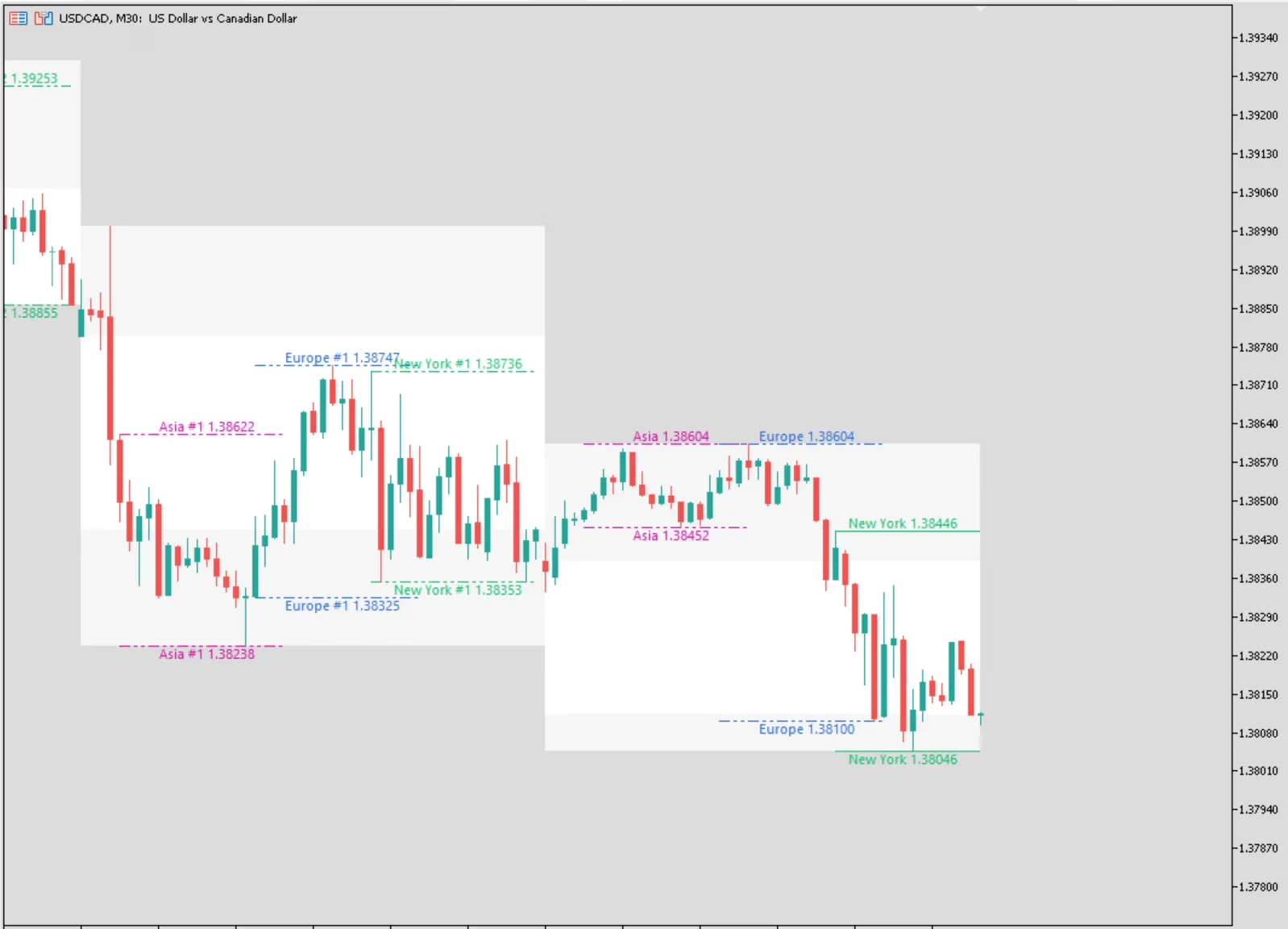
EUR/USD M15 chart with the FXTT Session High Low MT5 indicator active, displaying Asia (blue), London (green), and New York (orange) session high and low levels across two trading days.
📋 Table of Contents
- Why Session High Low Forex Levels Matter
- The Three Major Forex Sessions: Times, Characteristics, and Volatility Profiles
- Four Ways to Trade Session High Low Levels
- How to Read Session Overlaps — The EU/NY Window
- FXTT Session High Low MT5 — Indicator Walkthrough
- Practical Chart Examples
- Pairing Session Levels with Complementary Tools
- Frequently Asked Questions
- Summary
Why Session High Low Forex Levels Matter
Forex volume does not flow evenly around the clock. The market opens in Asia, transitions through Europe, then into New York — and closes again. Each session brings its own participants: regional banks, institutional desks, and retail flow concentrated in local business hours.
When a session closes, the high and low it formed become reference prices. These are levels where buying or selling pressure was exhausted for that period. They represent the accepted range of value for that session — and that context does not disappear once the clock rolls over.
Understanding session high low forex structure means you can ask better questions about where price is likely to react next:
- Is price breaking out of Asia's range into new territory?
- Is it retesting yesterday's London high before continuing?
- Is the New York open trapped inside a tight range, suggesting a false breakout is likely?
These are exactly the questions session high and low levels help you answer — and they are available on every major pair, every single day, for free.
The Three Major Forex Sessions: Times, Characteristics, and Volatility Profiles
Each session has distinct personality traits that shape how price behaves within it and how its session high low forex levels influence subsequent sessions. According to the Bank for International Settlements, over $7.5 trillion in forex is traded daily — and the majority of that volume is concentrated within these three session windows.
Asia Session (Tokyo)
Typical time: 00:00–09:00 GMT
The Asia session is the quietest of the three. Liquidity is lower, spreads can be slightly wider on some pairs, and price often consolidates in a relatively tight range — particularly on EUR/USD and GBP/USD, which have less European or US institutional participation at this time.
The Asia session high low forex level is especially important for European session traders. London often uses the Asia range as a reference: either breaking beyond it to set direction for the day, or reversing from its extremes once European institutions enter the market. The Asia range is frequently the starting point for the day's entire directional move.
Europe Session (London)
Typical time: 08:00–17:00 GMT
London is the highest-volume session in the forex market, accounting for the largest share of global daily forex turnover. When London opens, volatility typically spikes — and this spike frequently targets the extremes of the Asia session.
A classic institutional pattern: accumulate positions during the quiet Asia range, then drive price through the Asia high or low at the London open to trigger stops and fill institutional orders at better prices before reversing. This pattern — sometimes called a "London sweep" — is best identified and understood through session high low forex analysis.
New York Session
Typical time: 13:00–22:00 GMT
New York brings the second major liquidity surge of the day, especially on USD pairs. The first two to three hours of the New York session overlap with London, creating the highest-volume window of the entire trading day — typically 13:00–17:00 GMT.
After London closes, New York activity gradually slows. Price sometimes ranges, retraces moves from the London session, or consolidates ahead of the next Asia open. The London session high and low often acts as the outer boundary of the New York session's price action.
24-hour GMT timeline of the three major forex sessions — Asia (00:00–09:00), London (08:00–17:00), and New York (13:00–22:00) — with the high-volatility London/New York overlap (13:00–17:00) highlighted.
Four Ways to Trade Session High Low Levels
Session high low forex levels are reference points, not entry signals by themselves. The four most effective ways to incorporate them into your trading are:
1. Breakout
When price breaks cleanly above the prior session's high — or below its low — with momentum and closes beyond the level, this can confirm the start of a new directional move. London breaking above the Asia high on strong EUR/USD momentum is one of the most consistent breakout setups in intraday forex trading.
Combine with a momentum filter or volume signal for confirmation. Avoid entering breakouts into major resistance zones directly overhead.
2. Pullback to the Level
After a confirmed break of a session high low forex level, price often returns to test the level it just crossed. A former resistance becomes support after the breakout — and session highs and lows are among the most reliable areas for this "break, retest, and continue" behaviour.
Wait for the pullback, observe how price reacts (rejection wick, bullish close, stalling momentum), then enter in the breakout direction with a stop placed just beyond the tested level.
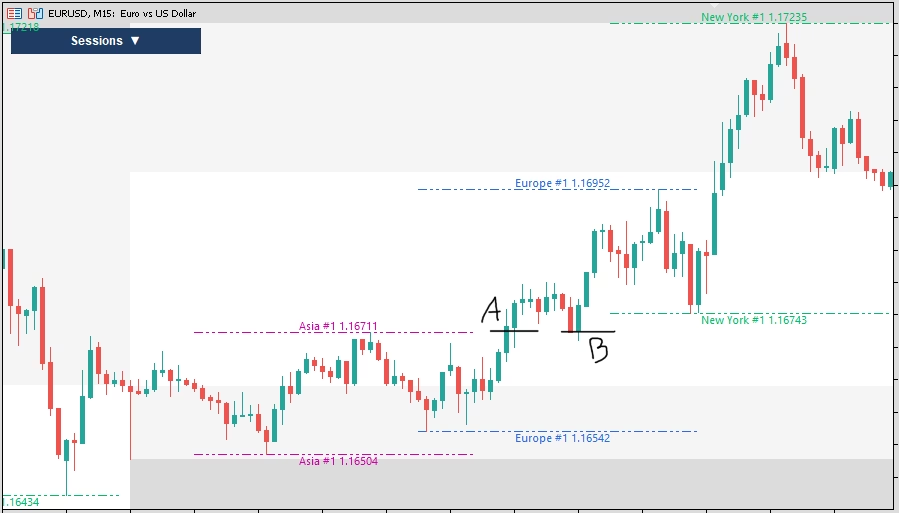
Annotated EUR/USD M15 chart showing two phases of the session level breakout setup: (A) bullish candle closes above the Asia session high, (B) price pulls back to retest the level as support before continuing higher.
3. False Breakout (Stop Hunt)
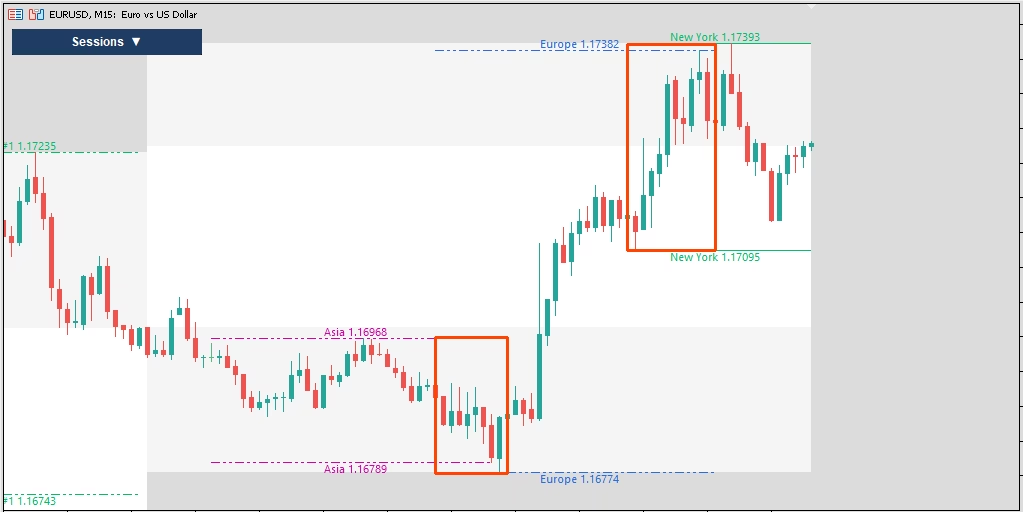
Arguably the most important pattern to understand. Price breaks through a session extreme, appears to be running with momentum, then reverses sharply back inside the range. This is the institutional stop-hunt in action: liquidity sits just beyond the session high low forex level in the form of retail stop losses and pending orders, and larger players drive price through it to fill their own orders before reversing direction.
Recognising this pattern at session levels dramatically improves your ability to avoid being stopped out — and to take trades in the reverse direction with strong risk-to-reward potential.
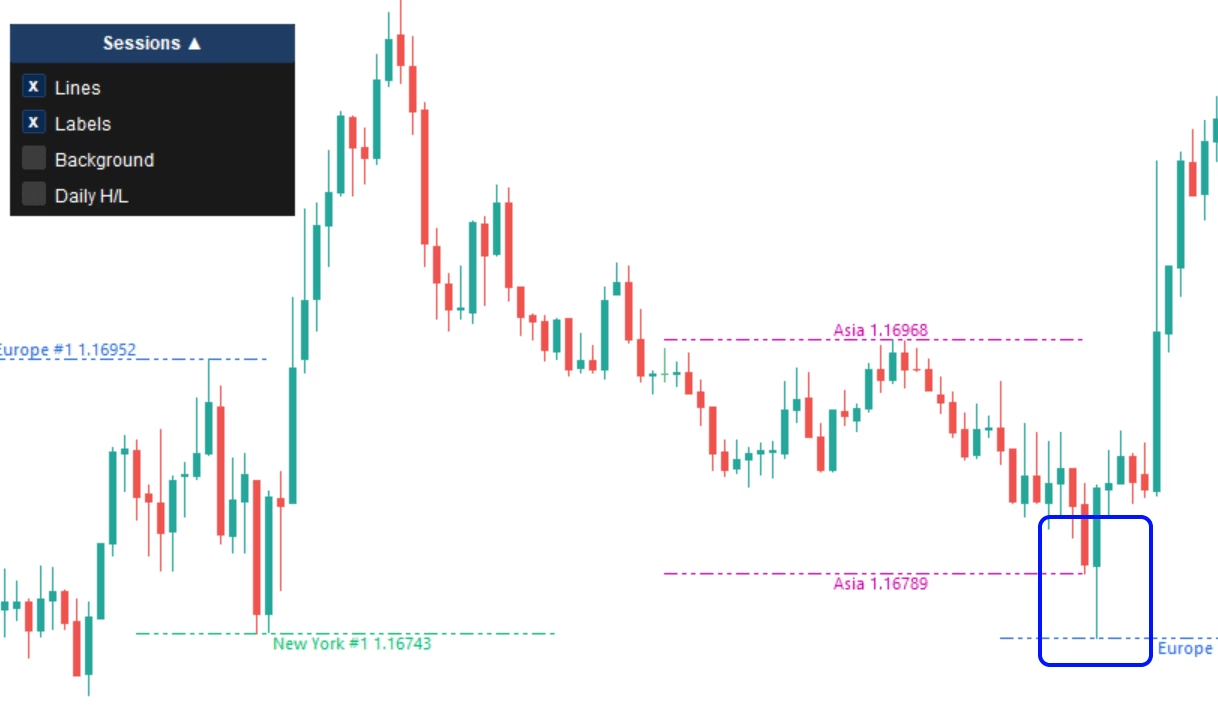
GBP/USD M15 chart illustrating the false breakout pattern at a session low: price spikes below the level by 8–12 pips to take retail stops, then reverses sharply back inside the range — a classic institutional liquidity sweep.
4. Range Trading
During low-volatility periods — late New York, early Asia — price often oscillates between the current session's developing high and low. Trading from the session extremes back toward the interior of the range is a valid approach when there are no major catalysts and the range is clearly established with at least two touches on each side.
How to Read Session Overlaps — The EU/NY Window
The most important overlap in forex is the London/New York crossover, running approximately 13:00–17:00 GMT. This window concentrates the highest liquidity and produces the largest price moves of any period in the trading day.
During this overlap, two competing sessions are both active. The European morning move is either accelerating or starting to reverse as New York institutional flow enters the market. Some of the best session high low forex setups emerge precisely because of this tension:
- London has pushed price strongly in one direction through the morning
- New York opens and the London session high or low becomes the key battleground
- Either a continuation drive through that level or a sharp reversal from it marks the day's definitive directional move
When both session levels are visible on the chart simultaneously, these dynamics become immediately readable. You are no longer reacting to random candles — you are watching price interact with known structural reference points.
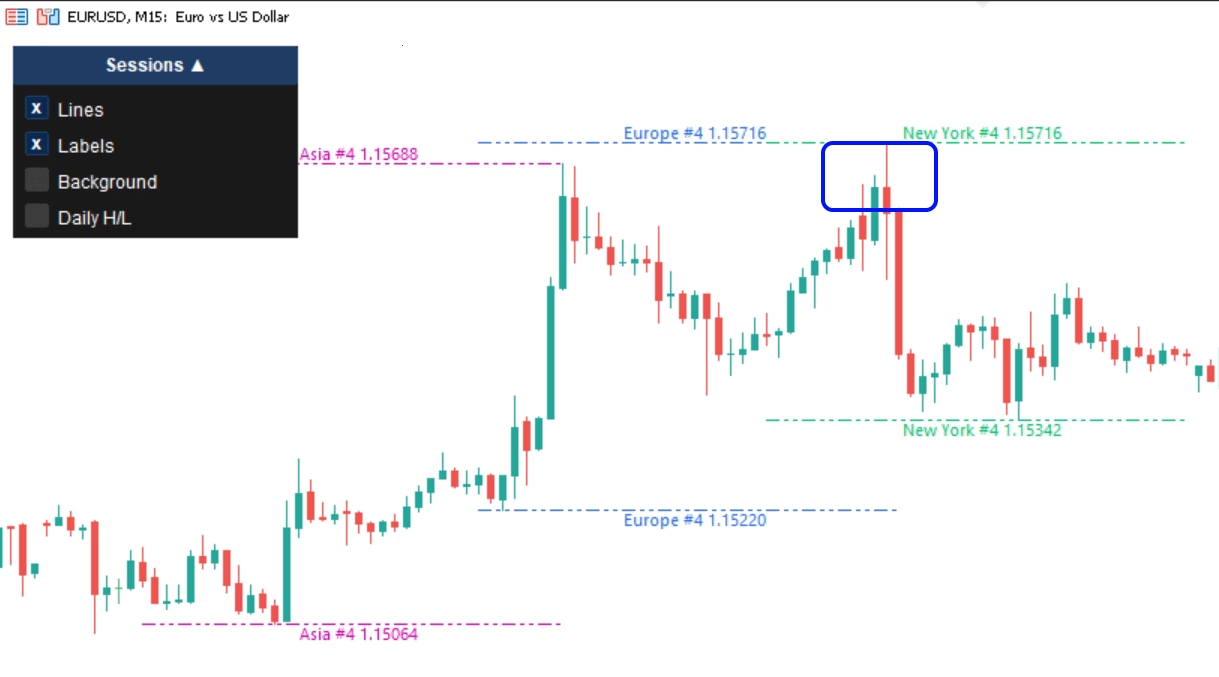
EUR/USD M15 chart spanning a full trading day. The London session high acts as a key level at the New York open (13:00 GMT). Annotated to show the London morning move, the EU/NY overlap window, and the resulting continuation or reversal reaction.
FXTT Session High Low MT5 — Indicator Walkthrough
Drawing session high low forex levels manually every day is tedious and error-prone, especially if you trade multiple pairs or need to account for different GMT offsets. The FXTT Session High Low MT5 indicator automates this entirely.
The indicator plots the high and low of each major session directly on your MT5 chart, updated in real time as each session progresses, and archived as fixed horizontal lines once the session closes.
Key Features
- Three sessions supported: Asia, Europe, and New York — all individually configurable
- Customisable session times: Adjust start and end hours to match your broker's server time or personal GMT offset
- Visual clarity: Each session uses distinct colours and line styles so levels never become visually cluttered
- Configurable history depth: Choose how many past sessions to display, from one session back to several days of history
- Session labels: Each level is clearly labelled so you always know which line belongs to which session
- Works on all timeframes: Most useful on M15–H1 for intraday trading; session lines remain meaningful context on H4 for swing trade positioning
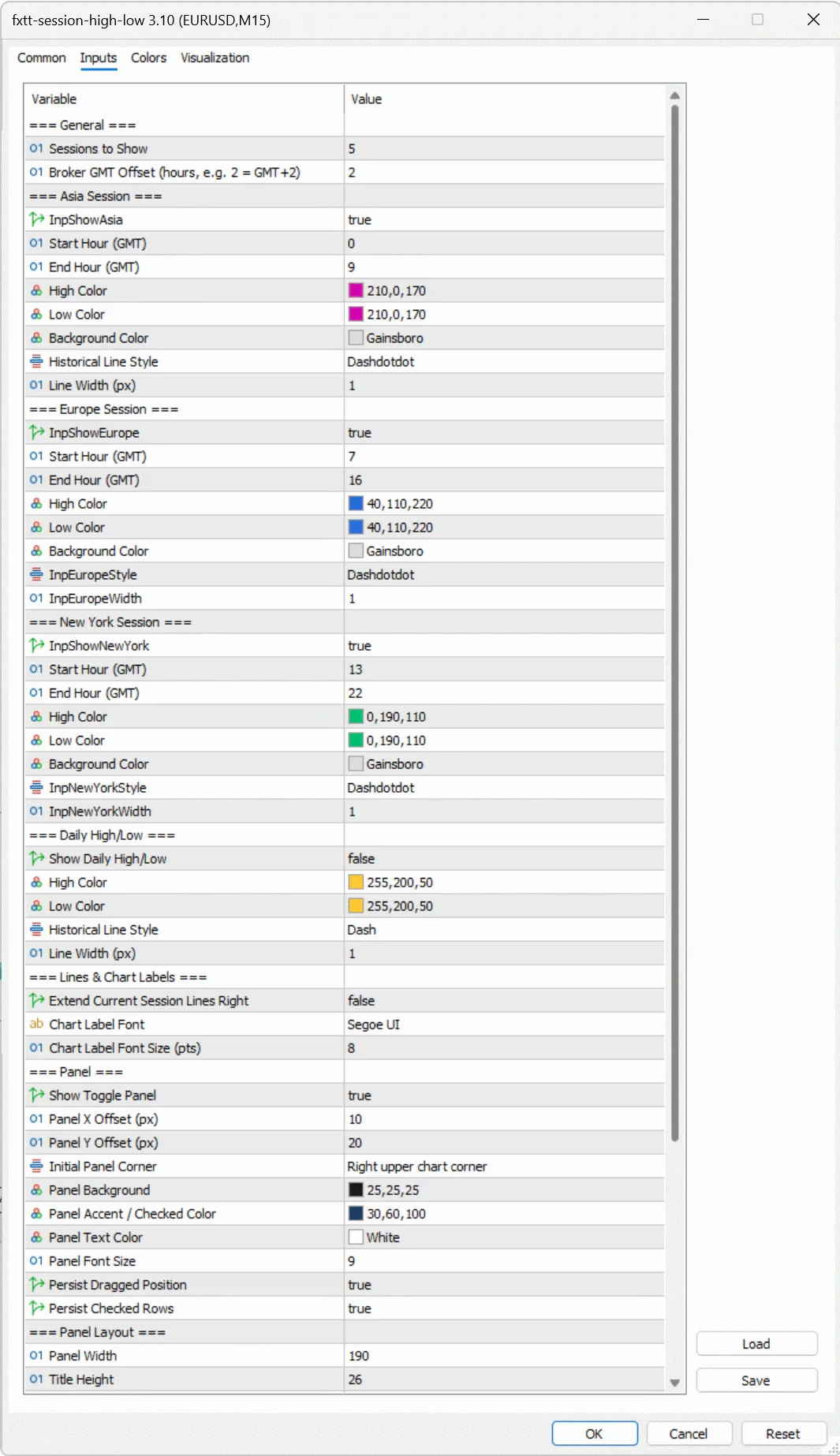
MT5 indicator inputs panel for the FXTT Session High Low indicator. Key settings visible: GMT offset, session start/end hours for Asia, London, and New York, historical sessions to display, and colour pickers for each session.
GMT Offset and Broker Server Time
The single most important setting to configure correctly is the GMT offset. Your broker's server time is typically GMT+0, GMT+2, or GMT+3 (depending on daylight saving time). The indicator allows you to input this offset so that session high low forex boxes align correctly with the actual session windows regardless of your broker.
To find your offset: check the time shown in the Market Watch panel at the bottom of MT5, then compare it to current GMT. The difference is your broker's GMT offset. Set it once and your session levels will always land in exactly the right windows.
The indicator is free and open source. Download the FXTT Session High Low MT5 indicator here.
Practical Chart Examples
Example 1: London Breakout of the Asia Range
On an M15 EUR/USD chart, the Asia session closes forming a 25-pip consolidation range. When London opens, price immediately tests the Asia high. After a brief hesitation, a strong bullish candle closes above the level. One candle later, price pulls back to retest the broken Asia high as support.
Entry: the pullback candle at the Asia high. Stop: below the Asia high. Target: next structural level above. With the FXTT indicator active, the session high low forex level is already marked on your chart before the London open. You see the break in real time and watch for the retest without needing to draw anything manually.
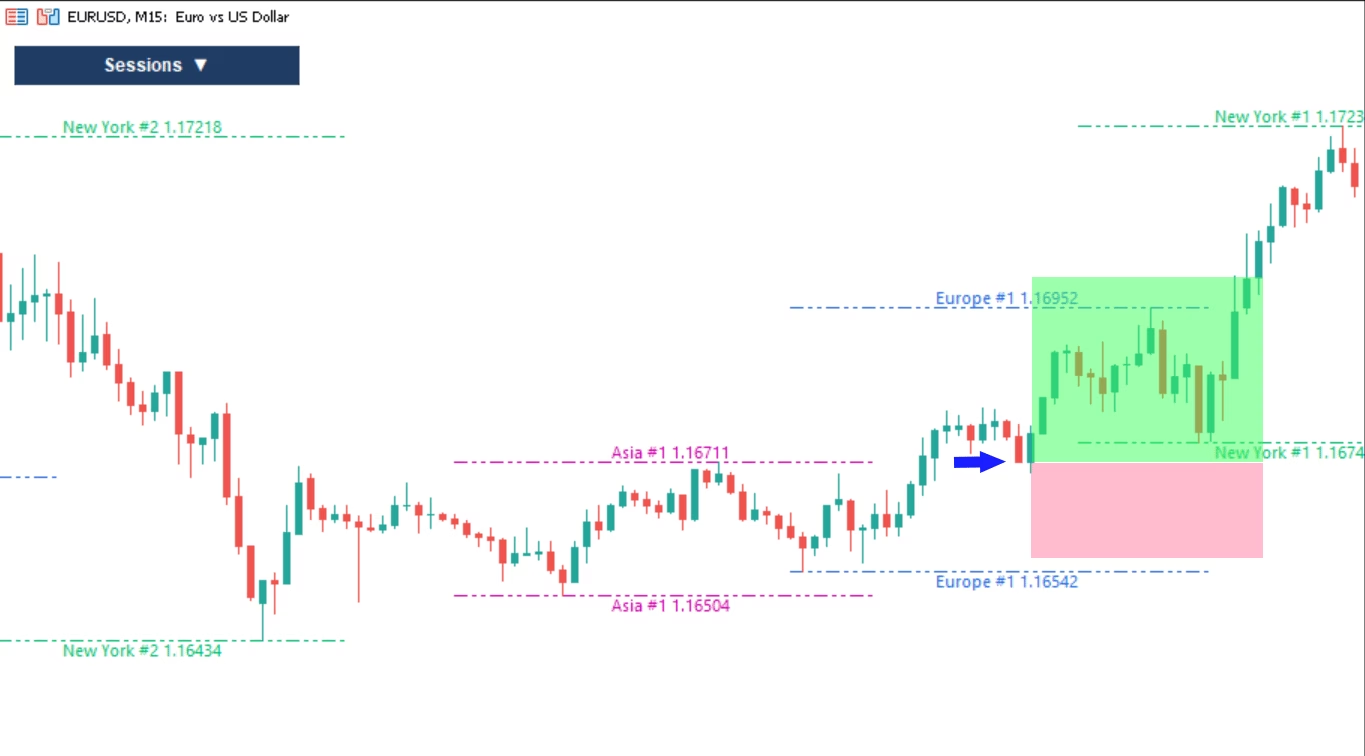
Step-by-step annotated EUR/USD M15 chart showing how to trade the London breakout of the Asia session high. Entry at the pullback retest, stop below the Asia high, target at the next structural level above. FXTT Session High Low indicator active.
Example 2: False Breakout of the London Low at the New York Open
London pushes GBP/USD lower through the morning session. At the New York open, price breaks the London low by 8–10 pips, appears to be continuing lower, then snaps back sharply. Within two candles, price is back inside the London range and accelerating upward.
The false breakout entry is triggered by the reversal candle that closes back above the London low. Stop is placed below the spike low. The move often runs to the London midpoint or London high as a target. This is one of the highest-probability session high low forex setups available to intraday traders — and the level made it identifiable.
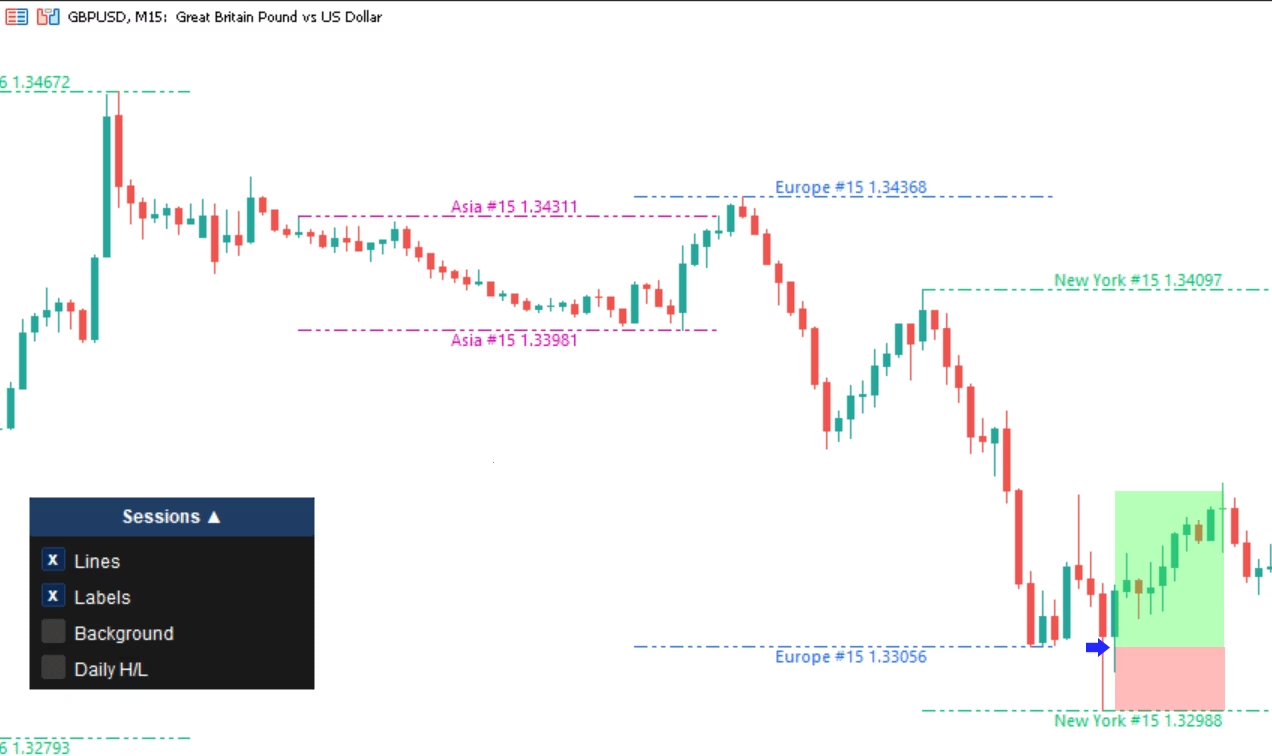
Annotated GBP/USD M15 chart showing a false breakout below the London session low at the New York open (13:00 GMT). Price spikes below by 8–10 pips, then reverses sharply. Entry trigger: reversal candle closing back above the London low.
Pairing Session Levels with Complementary Tools
Session high low forex levels work best as structural context layered with other tools rather than used in isolation. Here are the most natural combinations:
- Pivot points: Daily, weekly, and monthly pivot levels frequently align with session extremes. When a session high coincides with a daily pivot resistance, the level carries significantly more weight. The FXTT Pivot Points MT5 indicator supports all five calculation methods — Classic, Fibonacci, Camarilla, Woodie, and DeMark — and pairs naturally with session levels to give you a complete structural map before every session opens.
- Price action confirmation: Pin bars, engulfing candles, and rejection wicks at session levels dramatically improve the reliability of setups. Never enter solely because price touches a level — wait for the reaction.
- Momentum filters: RSI or Stochastic divergence at a session level helps identify exhaustion before the reversal confirms on price. Use them to filter out low-probability touches.
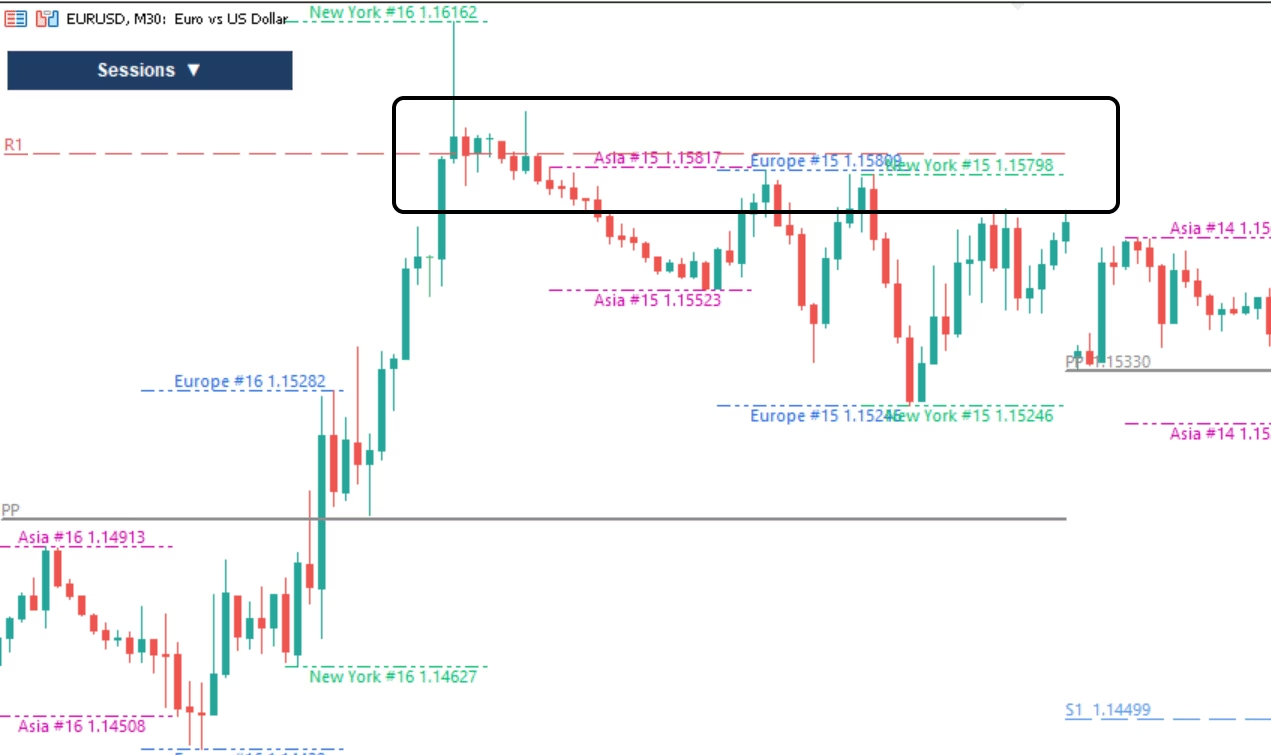
EUR/USD M30 chart combining the FXTT Session High Low and FXTT Pivot Points MT5 indicators. A session high aligns with the Daily R1 pivot level, creating a high-confidence resistance confluence zone — annotated with a label.
Frequently Asked Questions
How do I configure the GMT offset correctly?
Open MT5 and check the time shown in the bottom status bar or Market Watch panel. Compare that to the current GMT time. The difference is your broker's GMT offset. Enter that value in the indicator's settings and the session windows will align correctly. Most European brokers run on GMT+2 or GMT+3.
How many past sessions should I display?
For intraday trading, showing 1–2 days of session history is usually sufficient. Too many historical lines clutter the chart and reduce clarity. For swing or multi-day analysis, extending to 3–5 days of session history can provide useful structural context — particularly for identifying where repeated reactions at the same session high low forex level are building a significant support or resistance zone.
Should I trade all three sessions?
You do not need to. Most traders get the best results by focusing on the one or two sessions most active during their personal trading hours. The Asia session levels are most relevant if you trade during London or the EU/NY overlap. London levels are most important for New York-based traders. Choose the sessions that match your schedule and apply the setups consistently.
What pairs work best with session level analysis?
Major pairs with strong session correlation produce the clearest session high low forex patterns. EUR/USD and GBP/USD are the most responsive to London and New York sessions. AUD/USD and USD/JPY show clearer Asia session structure due to higher Pacific participation. Avoid applying session level analysis to thinly traded pairs where institutional order flow is inconsistent.
Can I combine session levels with automated trade execution?
Session high low forex levels are structural reference tools — but your execution does not have to be manual. If you identify trendline-based entries around session levels, an EA can handle the order placement automatically. The Trendline EA executes breakout, pullback, and false-breakout setups directly from chart-drawn trendlines, making it a natural complement to session level analysis for traders who want to automate execution without removing themselves from the decision-making process.
Summary
Session high low forex levels are one of the most underused tools in retail trading. They provide structural context that makes breakout, pullback, false breakout, and range setups far more precise — and they explain price behaviour that would otherwise appear random.
The key takeaways:
- Each forex session (Asia, London, New York) forms a high and low that acts as a reference point for subsequent sessions
- London frequently targets the Asia range extremes at the open — understanding this removes the "why is price moving so fast?" confusion
- The EU/NY overlap (13:00–17:00 GMT) is the highest-volume window of the trading day and produces the most decisive moves
- The four core session high low forex setups are: breakout, pullback to the level, false breakout, and range trading
- GMT offset configuration is critical — set it once and your levels are always accurate regardless of your broker
The FXTT Session High Low MT5 indicator draws all of this automatically — no manual updating, no missed levels, no guesswork about session times. It is free, open source, and available for immediate download.
If you also trade with pivot points as additional structural reference, the FXTT Pivot Points MT5 indicator works alongside session levels to give you a complete structural map of the market before every session opens.